Why I Refused to Give My Child Her Own Smartphone
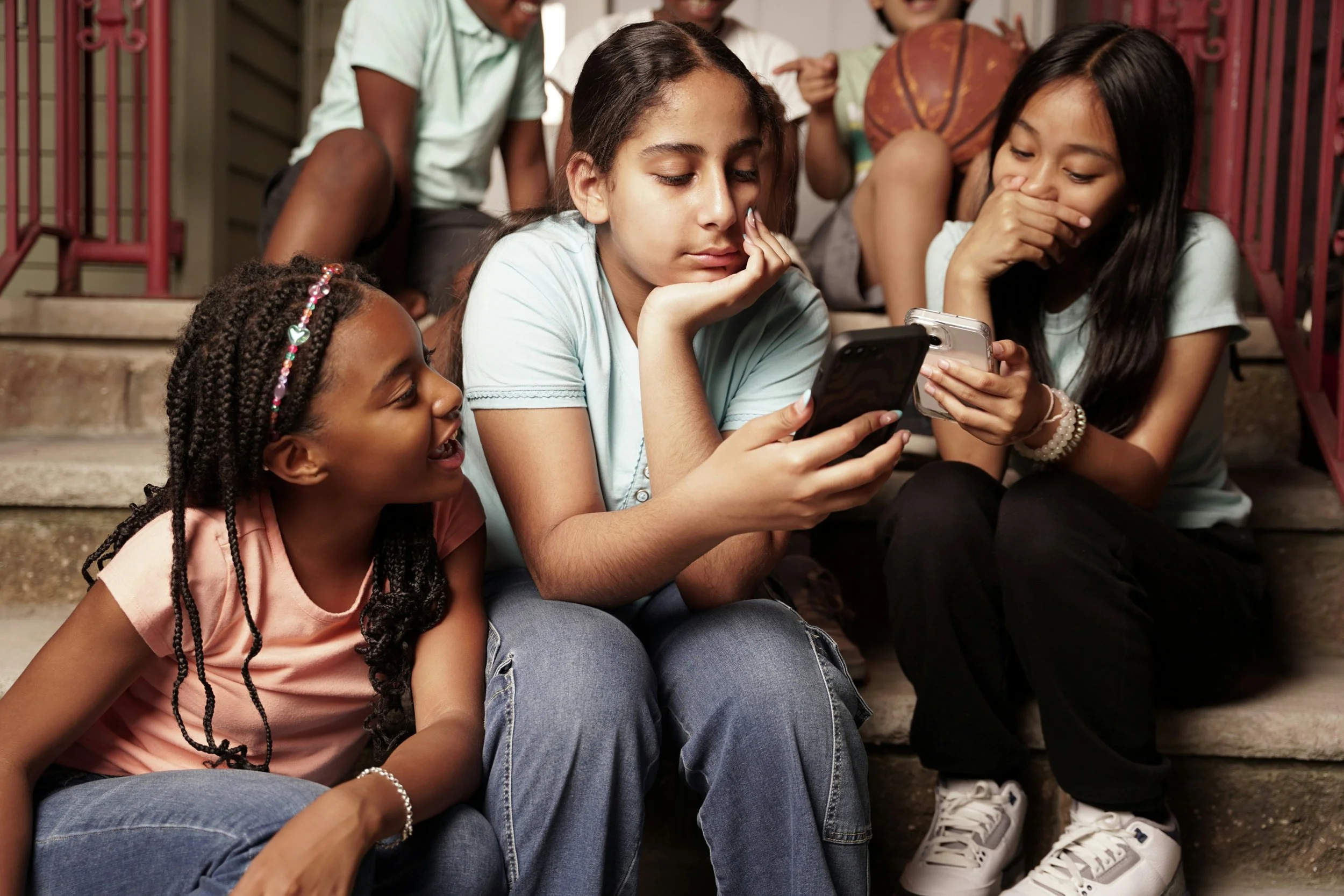
At some point, almost every parent faces the question: “Should I get my child a phone?”
It often feels like a small step. Normal. Convenient. Almost inevitable.
But in reality, I think it is one of the more significant developmental decisions we make as parents.
Because this is not just about giving a child access to a device. It is about shaping the environment their mind is being formed in.
A smartphone is not just a phone. It is a doorway. It is a camera, a messaging system, a gaming console, a social world, a search engine, an entertainment hub, a comparison machine, and a constant source of stimulation, all sitting quietly in a child’s pocket.
That is a lot of power to place in developing hands.
And so, for now, I have refused to give my 14 year old teen, her own smartphone.
Not because I am anti-technology.
Not because I think screens are evil.
Not because I want my child to be socially isolated or left behind.
But because I am deeply aware that childhood is not something we get to redo.
And as both a psychologist, and a parent, I am not convinced that handing a child a private, portable, internet-connected device is neutral.
Across the world, research is beginning to point to a concerning pattern: the earlier children are exposed to smartphones, the greater the risk appears to be across several areas of wellbeing.
One large longitudinal study following more than 10,000 children found that children who owned a smartphone by age 12 had around a 30% higher risk of depression, a 40% higher risk of obesity, and a 60% higher risk of insufficient sleep. Even more importantly, the data suggested that the earlier the exposure, the higher the risk.
That does not mean every child with a smartphone will experience those outcomes. But it does mean smartphones are not neutral.
They are powerful. And powerful things require maturity.
As a parent, I do not need perfect proof of harm before I make a protective decision. Sometimes wisdom means paying attention to patterns before the damage becomes obvious.
I want to protect her attention
One of the biggest reasons I have delayed giving my child a smartphone is because I care about her attention. Attention is not just about schoolwork.
It is the ability to listen deeply.
To think carefully.
To read slowly.
To pray quietly.
To finish a task.
To hold a conversation.
To notice beauty.
To sit with discomfort without needing instant distraction.
And smartphones are designed to capture attention.
Notifications, short videos, endless scrolling, messages, likes, streaks, and alerts are not accidental features. They are part of a system designed to keep users engaged for as long as possible. As one researcher summarised, many platforms are intentionally designed to hold attention and keep users online for longer periods.
Adults struggle with this. To be honest, I struggle with this.
So I think it is unrealistic to expect children and young teenagers to consistently self-regulate around technology that many grown adults find difficult to manage.
From a psychological perspective, this makes sense. The part of the brain responsible for impulse control, decision-making, planning, and emotional regulation is still developing well into adolescence. Now place that developing brain into an environment of instant rewards, constant notifications, endless scrolling, and social comparison.
Over time, the brain adapts.
Not toward patience.
Not toward regulation.
Not toward deep focus.
But often toward immediacy, distraction, and avoidance. And I want my child to build the muscles of attention before she has a world of distraction in her pocket.
I want to protect her mental health
I do not believe every child with a smartphone will automatically become anxious or depressed. That would be too simplistic. But I also do not think we should ignore the growing concerns around smartphones, social media, sleep, comparison, loneliness, and emotional wellbeing.
When we zoom out beyond phones and look at screen use more broadly, the pattern becomes even clearer. Adolescents with high daily screen time are significantly more likely to report symptoms of anxiety and depression, while screen use of four or more hours per day has been linked to poorer sleep and overall wellbeing. Heavy social media use has also been associated with depression, anxiety, loneliness, and even suicidal ideation.
Again, this does not mean every child will experience these outcomes. But it does mean we should pause.
Children are still developing their identity. They are still learning who they are, what they value, how they look, where they belong, and whether they are enough.
That is already a vulnerable developmental season. Adding constant comparison, online performance, social pressure, body image content, cyberbullying risk, and algorithm-driven content does not make that season easier.
As a therapist and as a parent, I do not want to outsource my child’s sense of worth to an algorithm.
I want her identity formed in relationship, not reaction.
In family, not feeds.
In purpose, not popularity.
In God-given worth, not public approval.
I want to protect her sleep
One of the most overlooked impacts of smartphones is sleep. And sleep matters far more than many parents realise.
When children do not sleep well, everything becomes harder: mood, learning, concentration, emotional regulation, impulse control, appetite, patience, and resilience.
Research from Harvard Medical School has highlighted that screen use, especially before bed, can interfere with melatonin production and disrupt sleep cycles. And when sleep is disrupted, it often creates ripple effects across a child’s emotional and mental health. Sleep impairment alone has been shown to explain a significant portion of depression and anxiety outcomes in young people.
A phone in the bedroom is not just a device in the bedroom.
It is friends in the bedroom.
Drama in the bedroom.
Notifications in the bedroom.
Entertainment in the bedroom.
Comparison in the bedroom.
The whole world in the bedroom.
That is too much.
Even if the content is innocent, the access is not neutral. Children need places where they can be unreachable. They need spaces where their nervous system can settle. They need evenings that are not hijacked by digital urgency.
One of the best things we can give our kids is not just a bedtime. It‘s a boundary.
I want her to learn friendship in real life
Another reason I have delayed the smartphone is because I want my child to develop interpersonal skills in the real world first. Friendship is not just messaging.
It is learning to read facial expressions.
To repair conflict.
To sit with awkwardness.
To notice when someone is hurting.
To apologise.
To forgive.
To listen.
To take turns.
To build trust slowly.
Digital connection can be helpful, but it can also become a substitute for the deeper work of relational maturity.
Children need practice being with people.
They need to learn how to be bored at a dinner table. How to talk to adults. How to include the lonely child. How to survive not being invited. How to manage conflict without screenshots. How to be present without performing.
A smartphone can make a child’s social world bigger, faster, and more intense before they have developed the emotional capacity to carry it. And that is one of my concerns.
I do not want my child’s social world to become 24/7 before she has learnt how to switch off, step away, and remain secure in herself.
It is not just what screens add, it is what they replace
This is the part many parents miss. The issue is not only what screens introduce into a child’s life. It is what they quietly replace.
When screen use increases, we often see decreases in physical activity, face-to-face interaction, unstructured play, boredom, creativity, and real-world coping skills.
And these are not optional extras. They are the building blocks of emotional health.
Children need to move their bodies.
They need to be outside.
They need to make things.
They need to talk face-to-face.
They need to practise waiting.
They need to experience boredom.
They need to learn that uncomfortable feelings are not emergencies.
A smartphone can fill every empty space. But children need empty spaces.
Because boredom is often where creativity begins.
Quiet is often where reflection begins.
Waiting is often where patience begins.
Stillness is often where the soul catches up.
Delaying is not depriving
One of the lies parents can feel pressured by is this: “If I delay the smartphone, my child will fall behind.”
But delaying is not depriving.
Delaying can be protective.
Delaying can be wise.
Delaying can be developmental.
Research suggests that delaying smartphone access, even by a year, may reduce risk across multiple areas of wellbeing. Why? Because it gives children more time to develop emotional regulation, social confidence, internal identity, and real-world coping skills before introducing the complexity of constant digital access.
In other words, delay strengthens the foundation. And I would rather strengthen the foundation before increasing the pressure.
This decision is not about pretending technology does not exist. It does.
And our children need digital literacy. They need to learn how to use technology safely, wisely, and purposefully. They need conversations about online safety, privacy, pornography, bullying, scams, body image, comparison, digital footprints, and discernment.
But there is a difference between teaching a child about the road and handing them the keys to the car before they are ready to drive.
Delaying a smartphone is not the same as avoiding the conversation.
In fact, it gives us more time for the conversation.
More time to build trust.
More time to teach discernment.
More time to practise limits.
More time to develop maturity.
More time to strengthen identity before exposure.
So instead of asking: “Should my child have a phone?”
Maybe we need to ask: “Is my child ready for the world that comes with it?”
Can they tolerate boredom without escaping it?
Can they manage limits without constant enforcement?
Can they navigate social pressure without losing themselves?
Can they handle comparison without internalising it?
Can they switch off without becoming distressed?
Can they use technology as a tool rather than being used by it?
Because a smartphone does not just give access. It requires maturity.
Refusing to give my child her own smartphone does not mean refusing every form of technology. She has a dumb phone in which she can call us when she’s out with friends, or message her friends via WhatsApp.
For some families, that might look like a basic phone without internet access. For others, it may mean a shared family device, monitored messaging, no social media, no phones in bedrooms, screen-free evenings, or delaying smartphone ownership until later adolescence.
The point is not to create one perfect rule for every family. The point is to parent technology rather than be pressured by it.
In our home, the question is not simply, “What is everyone else doing?” The question is: “What is wise for this child, in this season, with their maturity, temperament, and needs?”
Because as parents, we are not just raising children who can function in the world. And sometimes, the most loving decision we can make is not to rush what the world says is normal, but to protect what we know is foundational

Sabrina is a registered psychologist with over 15 years of experience working with families, children, and adolescents.
Based in Brisbane, Queensland, Sabrina offers face-to-face appointments or Telehealth.
To make an appointment click here or call M1 Psychology Loganholme on (07) 3067 9129.



















Disclaimer: The information provided on this site is for psycho-educational purposes only and is not meant as a substitute for therapy, counselling, or medical care. If you require personal mental health support, please consult a professional. In case of a crisis, contact emergency services immediately.